
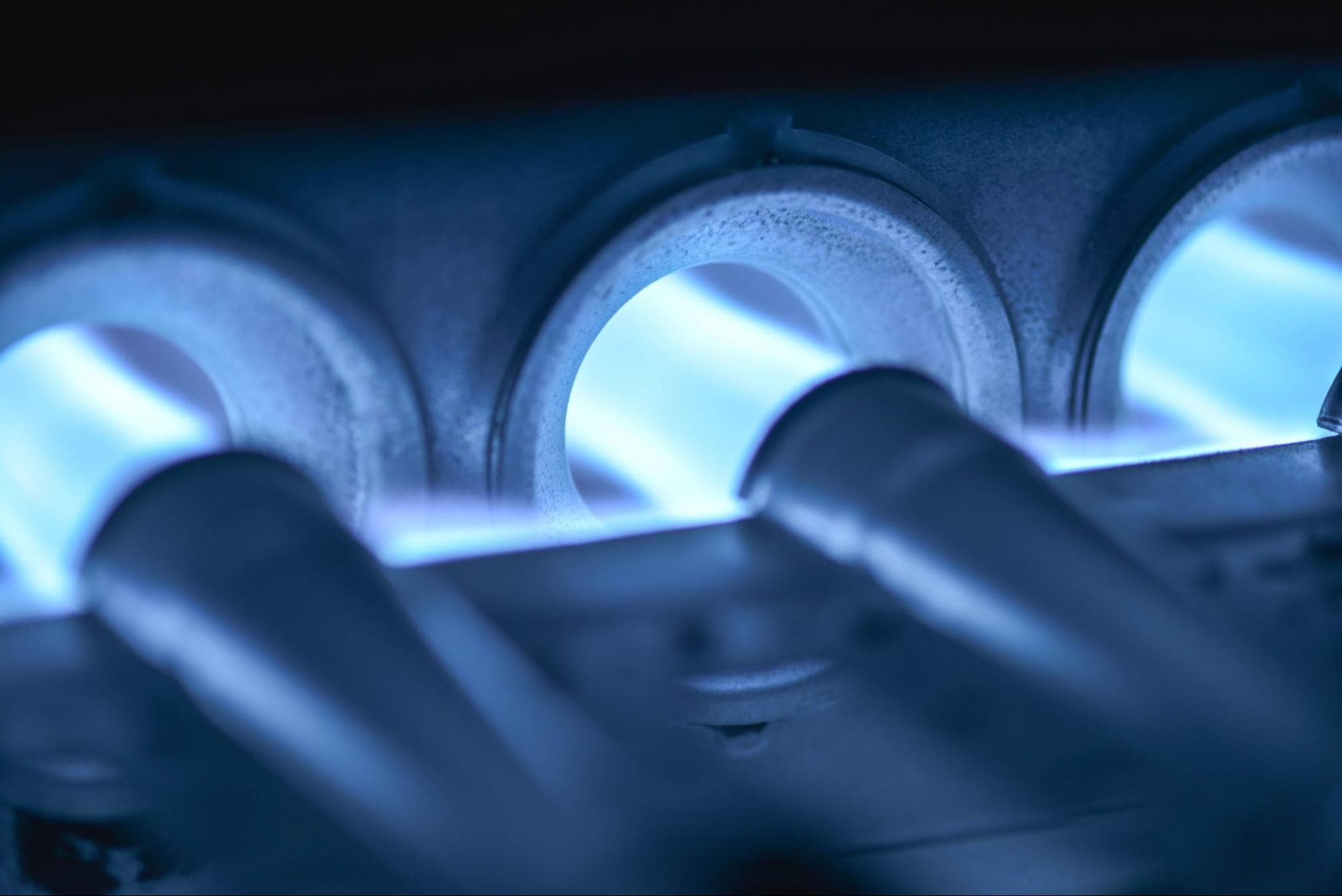
Gas furnaces use one of four ignition systems: a hot surface ignitor (standard in most furnaces built since the 1990s), direct spark ignition, an intermittent pilot, or a standing pilot on the oldest units. If your burners never light at all, suspect the ignitor. If they light and then die seconds later, suspect the flame sensor. Ignitors typically last four to seven years, and replacement is an affordable, common repair.
On this page:
What a Furnace Ignitor Does
The 4 Ignitor Types
Identify Yours in 60 Seconds
9 Signs of a Failing Ignitor
Ignitor or Flame Sensor?
Testing With a Multimeter
FAQs
When a gas furnace won't make heat, the ignitor is the first suspect any technician checks. It's the spark plug of your heating system, the one component standing between a thermostat's request and actual flame.
Knowing which of the four ignitor types your furnace uses tells you a surprising amount: how it should behave at startup, what its failure looks like, and what fixing it will involve.
This guide walks through all four types, how to identify yours in under a minute, the warning signs of a failing ignitor, how to test one with a multimeter, and the honest line between homeowner diagnosis and professional repair.
What Does a Furnace Ignitor Do?
Simple job, critical position. When your thermostat calls for heat, the gas valve opens and the ignitor lights the gas at the burners. That's it, but nothing happens without it.
Modern furnaces monitor the attempt closely. If the gas doesn't light within a few seconds, the control board shuts the gas off and tries again. And the ignitor is not the component that keeps the furnace running once lit; that's the flame sensor's job, a distinction we'll come back to, because confusing the two costs homeowners real money in wrong parts.
Do You Have One of These Gas Furnace Ignitors?
1. Hot Surface Ignition System
The standard in furnaces manufactured from the 1990s onward, and what you almost certainly have if your furnace is under 25 years old. A hot surface ignitor (HSI) is a small ceramic element that glows orange-hot when the thermostat calls for heat, like a tiny toaster filament. Once it reaches ignition temperature, the gas valve opens and the passing gas lights against it.
No standing flame and no wasted gas between cycles, which is exactly why the industry standardized on it.
Within HSIs there's a distinction worth knowing, because it affects lifespan and replacement. Silicon carbide ignitors are the older design: a flat, forked "spade" element, typically 120-volt, effective but famously brittle. A fingertip's pressure can crack one. Silicon nitride ignitors are the newer generation: usually a slimmer rod or pin shape, often 80-volt, physically sturdier and longer-lived.
One critical caution hides in those voltages. An 80-volt ignitor wired to 120 volts fails almost immediately, which is a classic outcome of grabbing the wrong "universal" replacement. Match the part exactly.
2. Direct Spark Ignition System
Common in furnaces from the 1980s and 1990s, and still used in some modern equipment. Direct spark ignition (DSI) skips any intermediary: an electrode throws a high-voltage spark directly at the main burners the moment the gas valve opens. You'll hear rapid clicking, like a gas range lighting. Efficient and quick, with the electrode and its control module as the usual failure points.
3. Intermittent Pilot Ignition System
Found mainly in furnaces from the 1980s through the early 2000s. This design keeps the pilot concept but fixes its waste.
A spark lights a small pilot flame only when heat is called for. The pilot proves itself to a sensor, and then the main burners light from the pilot. When the heating cycle ends, the pilot goes out.
You'll hear clicking at startup here too, from the spark igniting the pilot rather than the main burners.
4. Standing Pilot Ignition System
The oldest design, standard from roughly the 1920s into the 1980s: a small flame that burns continuously, day and night, all year, waiting to light the burners. If you can see a little blue flame through your furnace's window with the system idle, this is yours.
Standing pilots are simple and repairable, but they burn gas around the clock for a job that occupies a few minutes an hour in winter. A furnace old enough to have one is generally old enough that replacement deserves a conversation (more on that below).
Which Type Do You Have? A 60-Second Identification Guide
You don't need tools, just eyes and ears at startup. Turn the thermostat up a few degrees and watch the furnace through its inspection window or louvers:
What you observe at startup | What you have |
A steady orange glow appears, then the burners light | Hot surface ignitor |
Rapid clicking, then the main burners light directly | Direct spark ignition |
Clicking, then a small flame, then the main burners | Intermittent pilot |
A small blue flame is always burning, even when idle | Standing pilot |
Two backstops: your furnace's age brackets the possibilities (built since the late 1990s almost certainly means an HSI), and the data plate inside the access panel lists the model number, which a quick search or a technician can decode precisely.
9 Signs of a Malfunctioning Furnace Ignitor
Failing ignitors announce themselves. Watch for: (1) the furnace won't turn on at all; (2) the blower runs but the air is cold, since no ignition means no heat to move; (3) no visible glow at startup on an HSI system; (4) clicking that never ends in flame on spark systems; (5) short cycling, meaning starting, stopping, and restarting in quick succession; (6) a tripped circuit breaker, which a shorting ignitor can cause; (7) slow or weak heating as ignition grows unreliable; (8) rising gas bills from repeated failed ignition attempts; and (9) visible cracks or damage on the ignitor element itself.
One behavior deserves its own explanation, because it confuses everyone the first time: furnace lockout.
Modern furnaces attempt ignition a limited number of times, typically three. If every attempt fails, the control board locks the furnace out for safety, usually for an hour or more, often blinking an error code. This is the furnace protecting your home from unburned gas, not an additional malfunction.
Cycling power at the switch can clear a lockout once. But a furnace that keeps locking out is telling you the same thing three different ways: something in the ignition system needs attention.
Ignitor or Flame Sensor? The Two Parts Everyone Confuses
These two small components cause most no-heat calls, and they fail with tellingly different symptoms.
Bad ignitor: the burners never light at all. No whoosh, no flame, cold air.
Bad flame sensor: the burners light and then shut down within three to seven seconds.
The sensor's job is to confirm flame exists once ignition happens. When it can't (usually because it's coated in oxidation), the control board assumes danger and closes the gas valve on a flame that was actually burning fine.
If your furnace lights briefly and dies, your problem is probably the sensor, not the ignitor. We've covered that failure in its own guide to the signs the flame sensor in your furnace has gone bad, including how it's tested and cleaned.
No heat right now, on a cold night? Skip the diagnostics and get help — gas plus 120 volts is the wrong combination for guesswork at 11 p.m. Snell runs 24/7 emergency heating service 365 days a year with no overtime charges, the same rate on a holiday night as a weekday morning, and after a one-time diagnostic you get an upfront, binding quote before any repair begins. Call 703-543-9649.
How to Test a Furnace Ignitor With a Multimeter
If you're comfortable with a multimeter and want to confirm the diagnosis before calling, an ignitor can be safely tested for resistance.
The procedure: (1) cut power to the furnace at the breaker and switch; (2) turn the gas control to off; (3) remove the access panel and locate the ignitor — on an HSI, it's the small ceramic element on a bracket near the burners; (4) unplug its wiring harness connector, avoiding any contact with the element itself (more on why below); (5) set the meter to ohms and touch a probe to each terminal of the plug.
Reading the result: a healthy silicon carbide HSI typically measures roughly 40–90 ohms, with most falling between 40 and 60. A healthy silicon nitride HSI runs higher, roughly 80–360 ohms. Glow-coil designs read low, around 2–20 ohms.
The verdict that matters most is the simplest: a reading of OL or infinity means the element is broken inside. The ignitor is dead and needs replacement.
Spark ignitors aren't resistance-tested this way; they're checked for continuity and spark gap, which is best left to a technician. And treat the multimeter test as diagnosis, not repair. It tells you what's wrong, while the replacement itself involves matching voltage, mounting, and element type exactly, on a gas appliance.
Why Ignitors Fail (and How to Make Yours Last)
Ignitors are consumable parts. Expect four to seven years, with silicon nitride at the top of that range and silicon carbide at the bottom.
What kills them: hairline cracks in the brittle element (carbide especially); skin oils from bare-handed installation, which create hot spots that burn through the element and are the reason technicians handle ignitors by the base, always; contamination from dust, rust flakes, and condensation; wrong-voltage replacements; short cycling from an oversized system or a dirty filter, which multiplies heat-stress cycles; and general overheating from restricted airflow.
Which points to the prevention list, and it's short. Change your filter. Fix short cycling rather than living with it. Have combustion checked annually: an annual furnace tune-up covers the gas pressure and burner checks that quietly determine how long an ignitor survives.
Furnace Repair & Installation Services From Snell
Whether your furnace needs a fifteen-minute ignitor swap or a professional opinion on whether it's worth fixing at all, Snell Heating & Air has been Northern Virginia's answer since 1972: more than 50 years serving Arlington, Alexandria, Fairfax, Ashburn, Reston, Sterling, and the surrounding communities.
Every job gets upfront, to-the-penny pricing with no hidden charges, our "On Time Or It's Free" promise, 24/7 availability with no overtime rates, and 0% financing options on major repairs. Call 703-543-9649 or book furnace repair in Northern Virginia online today.
Frequently Asked Questions
How long should a furnace ignitor last?
Typically four to seven years, though well-maintained silicon nitride ignitors can stretch toward a decade while brittle silicon carbide models fail sooner. Frequent short cycling, dirty filters, and contamination shorten any ignitor's life. If your furnace is past its second ignitor in a few years, have the underlying cause diagnosed.
What are the signs of a bad furnace ignitor?
The furnace won't start or blows cold air, there's no orange glow (or endless clicking without flame) at startup, the system short cycles or locks out after failed attempts, the breaker trips, or the element shows visible cracks. The defining tell: with a bad ignitor, the burners never light at all.
Is a hot surface ignitor the same as a flame sensor?
No. They're neighbors with opposite jobs. The ignitor lights the gas at the start of a cycle; the flame sensor confirms the flame exists so the gas valve stays open. If burners never light, suspect the ignitor. If they light and shut off within seconds, suspect the flame sensor.
How do I test a furnace ignitor with a multimeter?
With power and gas off, unplug the ignitor's harness and measure resistance across its terminals. Silicon carbide ignitors typically read 40–90 ohms and silicon nitride 80–360 ohms, but any OL or infinite reading means the element is broken and the ignitor needs replacement. Leave the replacement itself to a technician.
Are furnace ignitors universal?
Only partially. Universal replacement ignitors exist, but the voltage (120V vs. 80V), mounting bracket, and element type must all match your furnace. An 80-volt ignitor on a 120-volt circuit fails almost immediately. Mismatched "universal" parts are a leading cause of repeat ignitor failure, which is why exact matching matters more than the label.
Can a dirty air filter damage a furnace ignitor?
Indirectly, yes, and it's one of the most common culprits. A clogged filter restricts airflow, which overheats the furnace and drives short cycling, and every extra heat-up cycle stresses the ignitor element toward cracking. A filter changed on schedule is genuinely cheap insurance for the ignition system.
Related Articles
What do you need help with today?
Heating
No heat, strange smells, rising bills? We repair and replace heating systems to keep your home reliably warm.
Air Conditioning
AC blowing warm air? Uneven cooling in your rooms? We fix cooling issues fast and keep your system running smoothly all summer.
Plumbing
Our highly trained plumbers handle it all, from leaky faucets to full system installations and repipes.
Electrical
The smartest team in town. You need repair, installations, wiring, inspections, lighting — you name it.