

Last updated: August 2026
Occasional flickering from a loose bulb, an old bulb, or a mismatched dimmer is usually harmless and fixable in minutes. But flickering paired with buzzing, burning smells, warm switch plates, or lights dimming across the whole house points to loose wiring, an overloaded circuit, or a failing panel. Those are electrical problems that need a licensed electrician promptly, not eventually.
On this page:
Is Flickering Ever Dangerous?
One Fixture, One Room, or the Whole House?
The 14 Causes and Their Fixes
Why LED Lights Flicker
What You Can Safely Check Yourself
What Fixing It Costs
FAQs
Every home has a light that stutters now and then. The question that matters, and the one that probably brought you here, is whether the flicker is an annoyance or a warning.
The honest answer is that it can be either. The difference comes down to a handful of signs you can check in the next five minutes.
First: Is Flickering Ever Dangerous?
Let's answer the anxiety before the causes.
Usually harmless: a single lamp that flickers until you tighten the bulb, an aging bulb near the end of its life, a non-dimmable LED stuttering on a dimmer switch, and a brief dip when a big appliance kicks on.
Get it checked now: flickering accompanied by buzzing or sizzling sounds, a burning or acrid smell, switch plates or outlets that feel warm or look discolored, sparks, a breaker that keeps tripping, or whole-house flickering that recurs without an obvious cause. Those symptoms are the signature of loose or arcing connections.
Arcing is the heat source behind nearly three-quarters (73%) of home fires involving electrical distribution and lighting equipment, according to the National Fire Protection Association's own research — making it one of the leading ignition points for home electrical fires.
Narrow It Down: One Fixture, One Room, or the Whole House?
Before you troubleshoot anything, notice the scope of the flicker. It tells you where the problem lives.
One fixture: the bulb, the socket, the fixture's wiring, or the switch that controls it.
One room or circuit: a loose connection on that circuit, an overloaded circuit, or a failing breaker.
The whole house: the electrical panel, a loose neutral or service conductor, or a problem on the utility's side of the meter.
Keep your answer in mind as you read the causes below. It will point you to the right cluster fast.
The 14 Causes of Flickering Lights (and What to Do About Each)
1. A Loose Bulb
The classic. A bulb that isn't seated firmly makes intermittent contact with the socket, and every vibration interrupts it: footsteps upstairs, a slammed door, the dryer downstairs.
The fix: switch the light off, let the bulb cool, and tighten it snugly (not forcefully). If the flicker continues, swap in a known-good bulb before suspecting anything deeper.
2. Power Fluctuations From Large Appliances
If your lights dim for a half-second when the air conditioner, well pump, or dryer starts, you're seeing inrush current. Big motors briefly draw far more power at startup than they do running, and the voltage on nearby circuits sags.
An occasional, brief dim on startup is common. But if it happens on every cycle, gets more dramatic over time, or dims lights across the whole house, the circuit may be undersized or a service connection may be loosening. Both are worth a professional look.
As an HVAC company, we'll add this: if the flicker began around the time your AC started struggling, the compressor may be drawing excessive startup current. In that case, the flickering lights are diagnosing your air conditioner for free.
3. Dimmer Switch Incompatibility
Dimmers are the most common cause of LED flicker specifically. Older dimmers were engineered for incandescent loads and chop the power in a way many LEDs can't smooth out.
The fix: confirm the bulb is labeled dimmable, and if the flicker persists, replace the dimmer with an LED-rated model. (More on LEDs in their own section below.)
4. A Loose Connection in the Circuit
Wire connections loosen over the years as metal expands, contracts, and vibrates. A loose connection doesn't just flicker. It arcs, generating heat exactly where you can't see it, and it's the cause behind most of the danger signs listed above.
The fix: a licensed electrician traces and re-terminates the connection. Opening junction boxes, switches, and fixtures is not DIY territory.
5. An Overloaded Circuit
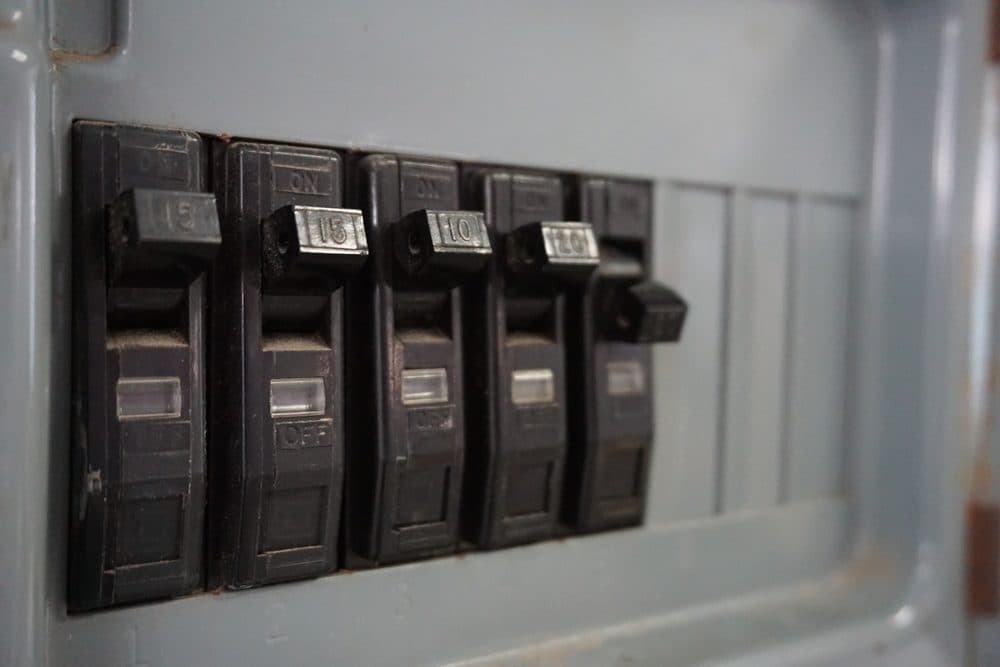
When one circuit feeds too much demand (a space heater, a microwave, and half the living room, say), the voltage dips and the lights on that circuit flicker or dim. Frequent breaker trips on the same circuit are the confirming clue.
The fix: redistribute the load short-term. Longer-term, have an electrician add a circuit or evaluate whether the panel itself is at capacity.
6. Utility Service Issues
Sometimes the problem never enters your house. Storm-damaged lines, transformer faults, and grid switching all cause flickering.
Here's the test: ask a neighbor. If their lights flicker at the same moments as yours, the cause is upstream, and the call to make is to your utility (Dominion Energy or NOVEC for most of our service area), not an electrician.
7. Old or Deteriorating Wiring
Wiring doesn't last forever. Northern Virginia's older housing stock, from mid-century Arlington colonials to early Reston townhomes, includes plenty of homes still running on their original conductors.
Brittle insulation, degraded terminations, and outdated wiring methods all produce chronic flickering, and they're fire risks in their own right.
The fix: an electrician's assessment. Where deterioration is widespread, whole-home rewiring is the durable answer.
8. Arcing
Arcing deserves its own entry because it's the mechanism that turns "annoying" into "dangerous": electricity jumping a gap in a degraded connection, at temperatures hot enough to ignite surrounding material.
Flickering plus buzzing, plus heat, plus any burning smell? Treat it as an emergency. Cut power to the affected circuit at the breaker and call for same-day service.
9. Main Connection and Panel Problems
When the whole house flickers and the utility checks out, the remaining suspects are serious ones: a loose neutral conductor, a loose service connection at the meter or weatherhead, or an aging, overtaxed electrical panel.
A loose neutral in particular can send wild voltage swings through the home, brightening some lights while dimming others, and it can destroy electronics. This cluster is unambiguously professional work, and promptly.

10. A Worn or Failing Light Switch
If a light flickers when you jiggle its switch, or the switch feels loose, crackles, or works intermittently, the switch's internal contacts are worn. Replacement is quick, inexpensive work for an electrician. A crackling switch should be replaced promptly, since it's a small arc happening on the wall.
11. A Loose Plug or Worn Outlet
For lamps: if the plug sits loosely in the outlet, or you can wiggle it and watch the lamp respond, the outlet's contacts have lost their grip. Stop using that outlet for anything substantial and have it replaced. Loose blade contact is another quiet arcing point.
12. The Wrong Bulb Type for the Fixture
Bulb-and-fixture mismatches cause flicker more often than people expect. A bulb exceeding the fixture's wattage rating can trigger thermal protection, non-enclosed-rated LEDs overheat inside enclosed globes, and mismatched smart bulbs fight wall dimmers.
The fix: match the bulb to the fixture's label for wattage, enclosure rating, and dimmability.
13. A Faulty Circuit Breaker
Breakers wear out. A breaker with degraded internal contacts can feed its circuit inconsistent power, and flickering lights are a common symptom. A worn breaker may also fail to trip when it should, which is the part that matters for safety.
If flickering isolates to one circuit and its breaker is old, hot to the touch, or trips erratically, have circuit breaker repair and installation handled professionally. That service page's symptom list starts with exactly this problem.
14. Voltage Fluctuation in the Home
If lights routinely dim and surge with no appliance pattern, your home's overall voltage may be unstable. A healthy home reads close to 120 volts; sustained readings past roughly 125 signal a problem worth diagnosing, possibly at the panel and possibly on the utility side. An electrician can log the voltage over time and pinpoint which.
Seeing the dangerous kind of flickering? If your lights flicker alongside buzzing, heat, or a burning smell, don't file it under "someday" — that combination is how electrical fires announce themselves. Snell has served Northern Virginia for more than 50 years, and our 24/7 emergency electrical service runs 365 days a year with no overtime charges: the same rate on a Sunday night as a Tuesday morning. Call 703-543-9649 and we'll make it safe today.
Why LED Lights Flicker (Even When Nothing Is Wrong)
LEDs earn their own section because they flicker for reasons incandescents never did.
Non-dimmable LEDs on dimmer circuits stutter by design; the electronics inside simply can't interpret a chopped waveform. Older TRIAC dimmers need a minimum electrical load to operate smoothly, and a 9-watt LED may not provide it, especially as the only bulb on the circuit. Bargain LEDs with cheap internal drivers flicker at low dim levels no matter what you pair them with.
Some LED flicker is invisible to the eye but shows up as banding on your phone camera. That kind is harmless, if annoying on video calls.
The fixes, in order: confirm the bulb is dimmable, pair LED-rated dimmers with quality LED bulbs, and where a dimmer circuit hosts only one or two LEDs, have the dimmer swapped for a model rated for low loads.
What You Can Safely Check Yourself
Five checks, all safe, no tools: tighten the bulb (power off first); swap in a known-good bulb; confirm dimmable bulbs on dimmer circuits; watch whether the flicker tracks with a specific appliance cycling on; and ask a neighbor whether their lights are doing it too.
That's the honest limit. Anything involving a switch plate, outlet, junction box, or the panel is licensed work — not because homeowners aren't capable, but because the dangerous causes on this list are precisely the ones that look fine from the outside.
What to Tell Your Electrician Before the Visit
A five-minute inventory makes the diagnosis faster and your bill smaller. Note when the flickering started, which rooms or fixtures it affects, whether it tracks an appliance (AC, dryer, well pump) or a time of day, whether it worsens in wind or rain, and any sounds, smells, or warm plates you've noticed.
"The kitchen lights dim every time the AC starts, and it began in June" points a technician somewhere specific. "The lights flicker sometimes" doesn't.
What Fixing It Costs (Honestly)
No two flickering-light calls are identical, so here's the honest cost frame rather than a fake number.
At the bottom: a bulb or dimmer swap, which is trivial. In the middle: replacing a worn switch, outlet, or breaker, all modest and quick. At the top: rewiring sections of an older home or replacing an overtaxed panel. Those are real projects, though they resolve far more than flickering.
Snell quotes lighting repairs and all electrical work upfront and to the penny before work begins, with no add-on charges or surcharges. You'll know the number before anyone touches a wire.
Still deciding whether to call? Snell's electrical services team can usually tell you over the phone whether your symptoms sound like a quick fix or something bigger — call 703-543-9649.
Why Northern Virginia Homeowners Call Snell
Snell Heating & Air has served Northern Virginia since 1972: more than 50 years of showing up on time for homeowners from Arlington and Alexandria to Ashburn, Fairfax, Reston, and Sterling. Our electricians quote upfront, to-the-penny pricing before work begins, back it with our "On Time Or It's Free" promise and a No Lemon guarantee, and cover the middle-of-the-night emergencies with 24/7 service at no overtime charge, ever.
Flickering lights are often a small fix and occasionally a serious warning. Either way, you'll get a straight answer. Call 703-543-9649 or book online with Snell's electrical services today.
Frequently Asked Questions
Should I be worried if my lights are flickering?
Worry is warranted when flickering comes with company: buzzing, burning smells, warm switch plates, tripping breakers, or whole-house dimming. Those signs point to loose or arcing connections and deserve a same-day call. A single lamp that settles down once you tighten the bulb is an annoyance, not an emergency.
Why are all the lights in my house suddenly flickering?
Whole-house flickering points past individual fixtures to the panel, a loose neutral or service conductor, or the utility's equipment. Check with a neighbor first; if they see it too, call your utility. If it's only your home, have an electrician inspect the panel and service connections promptly, since loose service conductors can damage electronics and worse.
Can flickering lights cause a fire?
The flicker itself doesn't ignite anything, but the loose, arcing connection often causing it can. Arcing generates intense localized heat inside walls, and electrical distribution problems remain a leading cause of home structure fires. That's why flickering with heat, buzzing, or burning smells should be treated as urgent rather than cosmetic.
Why do my lights flicker when the AC turns on?
A central air conditioner's compressor draws a large surge of current at startup, briefly sagging voltage on nearby circuits, and a quick, slight dim is common. If the dimming is severe, happens on every cycle, or is getting worse, the AC circuit may be undersized or a connection loosening. That's worth a professional look at both the wiring and the AC.
Why are only my LED lights flickering?
Usually a compatibility problem rather than a wiring problem: non-dimmable LEDs on a dimmer, an older dimmer that needs more load than efficient LEDs draw, or cheap internal drivers. Swap in a quality dimmable LED and, if needed, an LED-rated dimmer. If the flicker persists across bulb types, then look at the circuit.
Should I call an electrician for flickering lights?
Call when the flickering survives a bulb swap, isolates to one circuit or the whole house, tracks with appliance use, or arrives with any danger sign such as heat, buzzing, smells, or tripped breakers. Persistent flickering is a symptom, and the causes range from a worn switch to a failing panel. A licensed electrician can tell you which in one visit.
Related Articles
What do you need help with today?
Heating
No heat, strange smells, rising bills? We repair and replace heating systems to keep your home reliably warm.
Air Conditioning
AC blowing warm air? Uneven cooling in your rooms? We fix cooling issues fast and keep your system running smoothly all summer.
Plumbing
Our highly trained plumbers handle it all, from leaky faucets to full system installations and repipes.
Electrical
The smartest team in town. You need repair, installations, wiring, inspections, lighting — you name it.