

Air conditioning plays an important role in keeping your home comfortable, especially during the warmer months. While most homeowners rely on their system daily, many don’t fully understand how it works or what may cause it to stop working.
A basic understanding of how your AC system operates can make it easier to spot issues early, avoid unexpected breakdowns, and know when something isn’t working as it should—or when it may be time to repair or replace your system.
Below, we break down how an air conditioner operates and review some of the most common repair issues you may encounter as your system ages.
Key Takeaways
- Your AC works by cycling refrigerant to remove heat from your home, and when that process is disrupted, performance drops quickly
- Common issues like low refrigerant, frozen coils, and electrical problems can often be repaired if caught early
- Frequent breakdowns, rising energy bills, or an aging system (10–15 years) may signal it’s time to consider replacement instead of ongoing repairs
- Snell Heating & Air Conditioning can inspect your system, diagnose issues, and help you determine whether a repair or full replacement is the best long-term solution
How Does an Air Conditioner Work
Air conditioners remove moisture and heat from the outside air through the use of a compressor. An air conditioner’s compressor is filled with refrigerant that circulates through the outdoor unit, changing from a gas to a liquid.
This liquid is then sent through the indoor evaporator coil, where it changes from a liquid to a vapor, removing heat from the surrounding air. This cool air is then circulated throughout the home. As a closed-loop system, this process is repeated as often as needed to cool the home to the desired temperature.
If your system is old and struggling to keep up with this cycle, it may be time to consider a professional air conditioning installation.
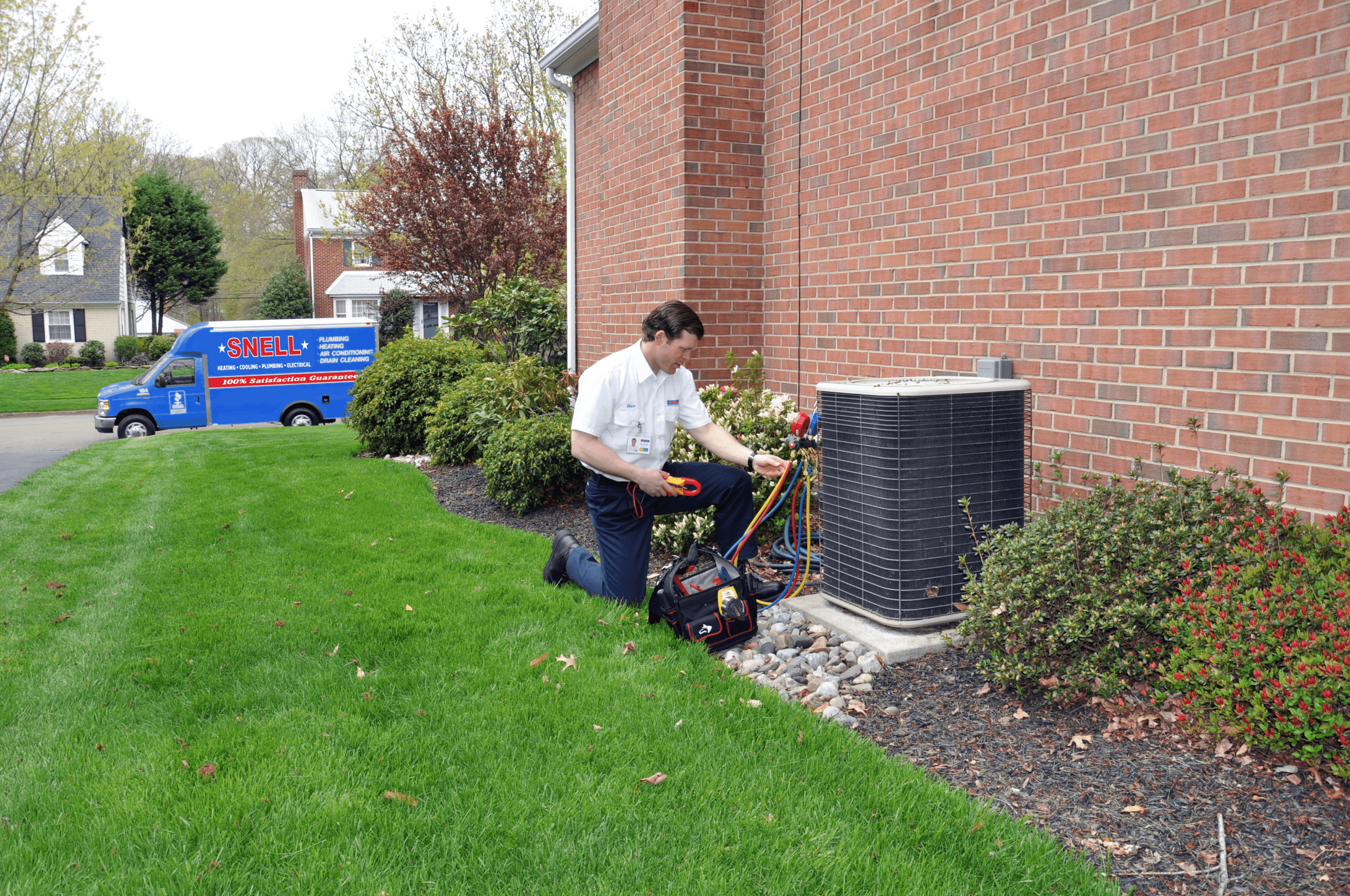
9 Common Air Conditioner Repair Issues
As air conditioners age, they require routine maintenance to stay in peak condition. If your system is struggling, it may be due to one of these common mechanical or electrical issues that require expert air conditioning services:
1. Low Refrigerant Levels
Refrigerant is the lifeblood of your AC. If a leak develops in the coils, the system won’t have enough “fuel” to remove heat effectively. If you notice your home isn’t getting as cool as it used to, a technician can find the leak, seal it, and recharge your levels.
2. Frozen Evaporator Coils
When evaporator coils get too cold, they can actually freeze over. Once encased in ice, they can no longer absorb heat. If your AC is running but blowing warm air, frozen coils are a likely culprit.
3. Dirty Condenser Coils
Located in the outdoor unit, condenser coils are exposed to the elements. Over time, dirt and grime build-up acts as insulation, making it much harder for the unit to release heat. An annual AC tune-up is the best way to keep these coils clean and prevent premature system failure.
4. Fan and Motor Problems
Your system relies on two main fans: one to blow air over the indoor coils and one to exhaust heat outdoors. If motors lose lubrication, belts wear out, or fans become unbalanced, your airflow will drop significantly.
5. Clogged Drain Lines
As your AC removes humidity from the air, that moisture has to go somewhere. It typically exits through a drain line. If this line becomes clogged with algae or debris, water can back up into the system, causing a malfunction or even water damage to your home.
6. Broken Electrical Connections
Heavy use during a heatwave puts a lot of stress on your electrical components. Worn-out wiring or corroded connections can prevent the blower motor or compressor from starting at all, necessitating an immediate air conditioning repair.
7. Failing Capacitors
Does your outdoor unit turn on while the indoor fan stays silent? This is often a sign of a failing capacitor. If you look at the capacitor and see “dark imprints” or leaking fluid, it needs professional replacement using specialized tools.
8. Thermostat Location and Accuracy
Sometimes the “repair” isn’t with the AC unit at all. If your thermostat is near a heat source—like a lamp, computer, or a sunny window—it will think the room is much hotter than it actually is. This causes the system to run constantly, making the rest of the house uncomfortably cold.
9. Tripped Circuit Breakers
It is not normal for your AC to trip the breaker. If this happens every time the cooling kicks in, you may have a damaged capacitor or an improperly grounded compressor. This is a safety issue that requires immediate professional attention.
Understanding Your System Helps You Stay Ahead
Air conditioning systems are built to be reliable, but like any mechanical system, they experience wear over time. By understanding how your system works and recognizing early warning signs, you can take a more proactive approach to maintenance.
If your system is showing any of the signs above, it may be worth having it inspected to ensure everything is operating safely and efficiently. If you are concerned about the cost of a major fix, explore our financing options to keep your home comfortable without the stress.